
Canine Genetic Testing

The breeding of domesticated dogs has been in practise for thousands of years, however the genetics behind the breeding has not been a factor until recently. Terms such as DNA, PCR and genetic health has been used more and more frequently over the last 5 years, but why it is needed has not always been widely understood. With genomic technologies becoming more relevant in the canine and feline world, it is important to shed some light on this complex but extremely interesting topic.
What is DNA?
Dogs, cats, humans, and all living things have unique DNA sequences, which make them what they are. DNA is composed of DNA nucleotides in sequence, which comprises of sections of DNA called genes, that contain the “blueprints” for making specific molecules. Each parent will have two copies of a gene that can be inherited by their offspring. These copies can be inherited in different ways which will produce different possibilities or “blueprints” for the offspring (Figure 1).
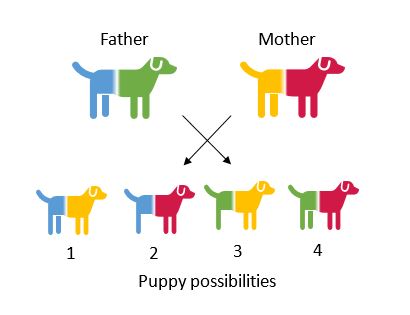
Figure 1: A graphic representation of inheritance, with each colour representing the portion of genetic material inherited from the mother and father, respectively. Each puppy will have a 1 in 4 chance of having a certain genetic possibility.
How are Health Issues Inherited?
The genetic mutations that are responsible for health problems are inherited from the parents. These mutations have dominant and recessive alleles or variants. The dominant variants are phenotypically expressed (these are the physical traits you will see, i.e., coat colour) whether they are homozygous dominant (they have two dominant alleles) or heterozygous (they have one dominant and one recessive allele). The recessive variants are only phenotypically expressed when both variants are recessive. This means that if both the parents carry the recessive allele, they won’t show any signs or symptoms of having the health issue but can pass on two copies of the recessive allele (one from each) and have offspring that are affected.
Benefits and applying the Knowledge
Not only are breeders able to fully understand the genetic implications involved with their pairings, pet owners are also able to get a wholistic view of their feline or canine companion’s health. Making informed breeding decisions is therefore, of the utmost importance and genetic testing allows us to make those decisions with confidence. Pet owners should be encouraged to purchase animals from reputable breeders, which regularly test their parental breeding pairs and the puppies bred. There is the potential for harmful conditions to develop in the offspring, which can negatively affect their lifespan and quality of life. There is of course the additional consideration of the financial & emotional implications of having pets with health conditions, which should be considered and should be made off an informed genetic evaluation of one’s pet. If both parents are tested before being paired the likelihood of any genetic mutations that will result in health issues can be predicted for each offspring. This is usually done with the classic punnet square (Figure 2). For example, if you pair a clear mother with a clear father, all the offspring will be clear. However, if you pair a clear mother with a carrier father, each offspring will have a 50% chance of being clear and a 50% chance of being a carrier for the mutation. This is also helpful because when new mutations in a specific breed do occur, the recessive alleles can then be bred out by crossing with clear individuals.
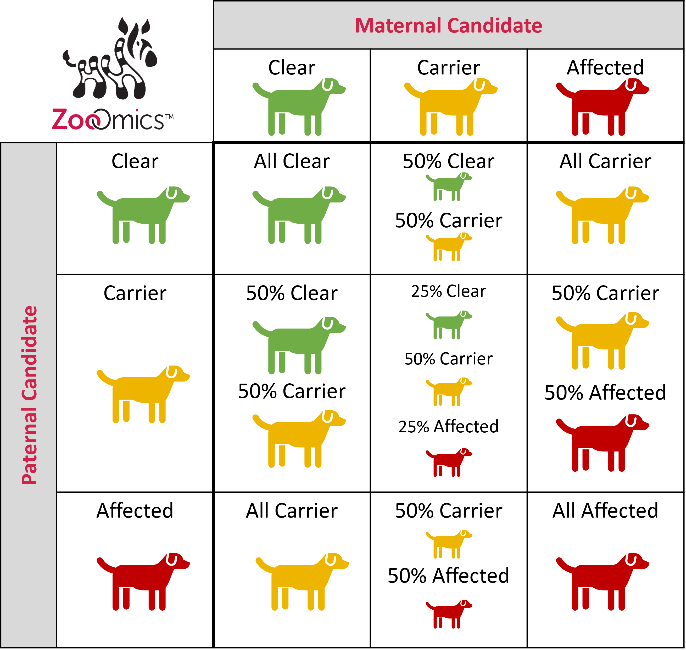
Figure 1: A graphic representation of inheritance, with each colour representing the portion of genetic material inherited from the mother and father, respectively. Each puppy will have a 1 in 4 chance of having a certain genetic possibility.
There are a vast number of health conditions which affect domestic pets, some of which are widely prevalent across many breeds but there are some conditions, which are very breed specific. Many of these health conditions have been studied and genetically quantified, with the causative gene and mutation identified. Genes such as these, can be genetically tested for and characterised for each animal. However, there are still many health conditions which afflict domestic pets, which are still yet to be identified and characterised. Research into this field, is ever evolving and will be a process of constant improvement and adding to the already established body of literature and knowledge. Some examples of breed specific testing would be something like JLPP which is a condition that commonly affects Rottweilers. Colour genetics is becoming more popular in the breeding community, with many breeders pairing specific parental candidates to achieve desired coat colours in the puppies. The genes responsible for many of these specific coat colours, can be tested for, however there are still many coat colour genes where the causative mutation is yet to be identified.
Whether you are a breeder or a pet owner, the genetic health status of your canine companion or feline friend should be a priority. This will ensure the health and happiness of your pet and give you peace of mind.
Where can I get Genetic Health Tests Done?
At ZooOmics we provide both health and colour testing as well as DNA profiles for canine and feline. We utilise innovative technology for our mutation testing and provide you with certificates for all testing done, which can be submitted to registrars and breed societies. Contact us at [email protected] for any enquiries on sample collection, shipping of samples, sample processing and services offered. Alternatively visit our website at www.zooomics.co.za to download our sample submission form.

Facebook: www.facebook.com/ZooOmics